
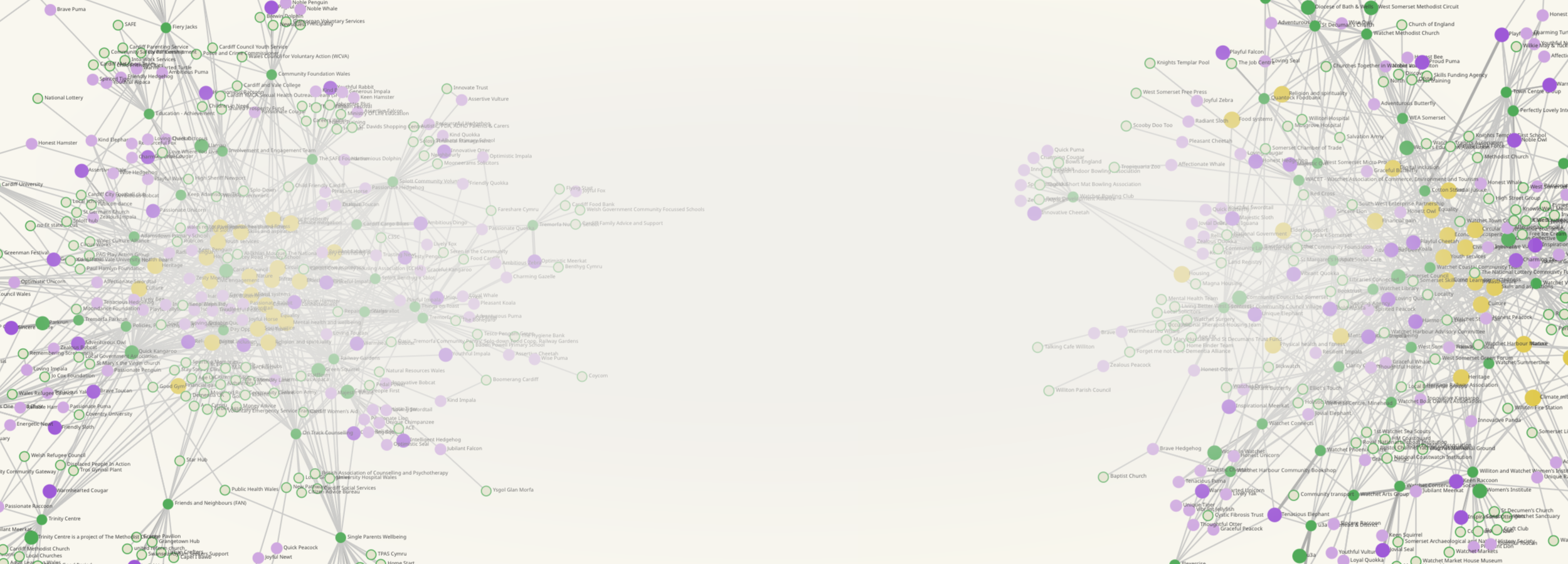
Collaboratively mapping a funding programme
Tracking the impact of funding across communities takes a lot of time - mostly spent inputting things into a database.
Traditional evaluation techniques can feel extractive and unwelcome to the community, even though they are often necessary to keep the programme funded.
Data gathering and evaluation phases usually happen at the end of a programme, by which time you have a static report that gets filed away- too late to respond to patterns of collaborations and projects with targeted resourcing.
The most visible community members tend to be those who are good at self promotion, not those who are integral (but invisible) as they build the field.
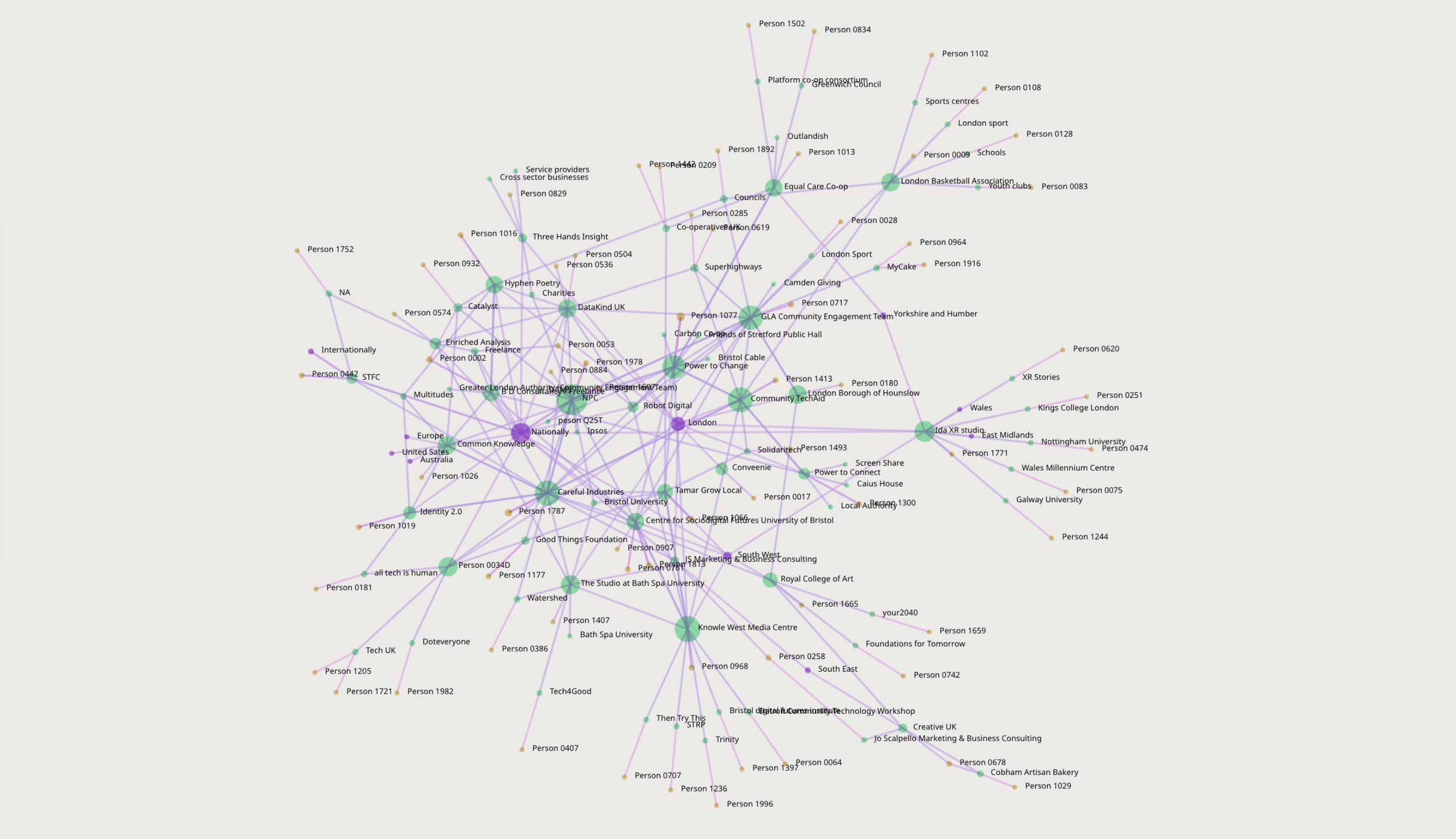
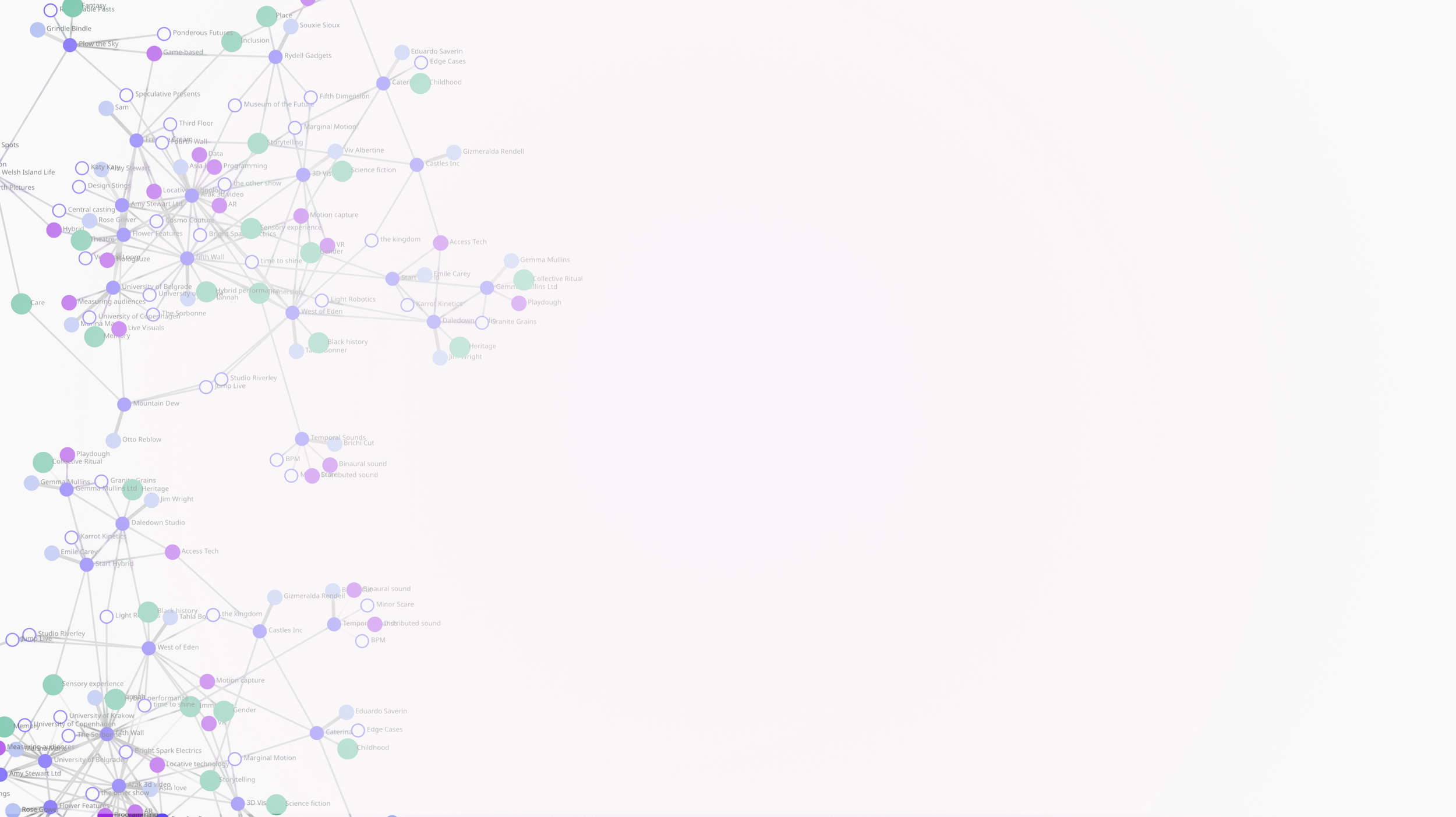
The Relational Mapping Toolkit helps funders locate the energies and connections and grow them across the network.
Build your community as you evaluate it and the community happily takes part.
Everyone gets equal access to the data - so everyone can act on the insights they enable.
Everyone can see where the potential points of collaboration are, or where they are overlapping.
Facilitate and enable your community to do what it wants to do- connect and grow.
Identify resource gaps mid-programme, and track second order impacts of your resources over time.
“An end of project report doesn't help you to design for better programme outcomes. We're looking forward to working collectively and transparently with our grantees, using the maps to explore how we can better target resources and initiatives across the life of the programme - building the community as we go”
— Emma Cox, West of England Combined Authority

“Simple and intuitive, the Relational Mapping toolkit has enabled us to visually represent, and understand, the outcomes of MyWorld investments across the West of England and beyond. Most importantly the work surfaced the secondary “ripples” of our project investments, revealing another layer of business impacts which would have remained invisible within normal project evaluation models.”
— Mark Leaver, MyWorld
